
Magical Concepts is an app for the iPhone and iPad. It was created by a certified speech-language pathologist who wanted to make “drilling” with flashcards fun and motivating. This engaging, colorful app includes over 2000 photos accompanied by audio instructions. Children are welcomed by Mago the Magician, who encourages them to work hard. Children earn stars for each correct response, and when they accumulate enough stars, they are rewarded with a magic show.


Screenshots
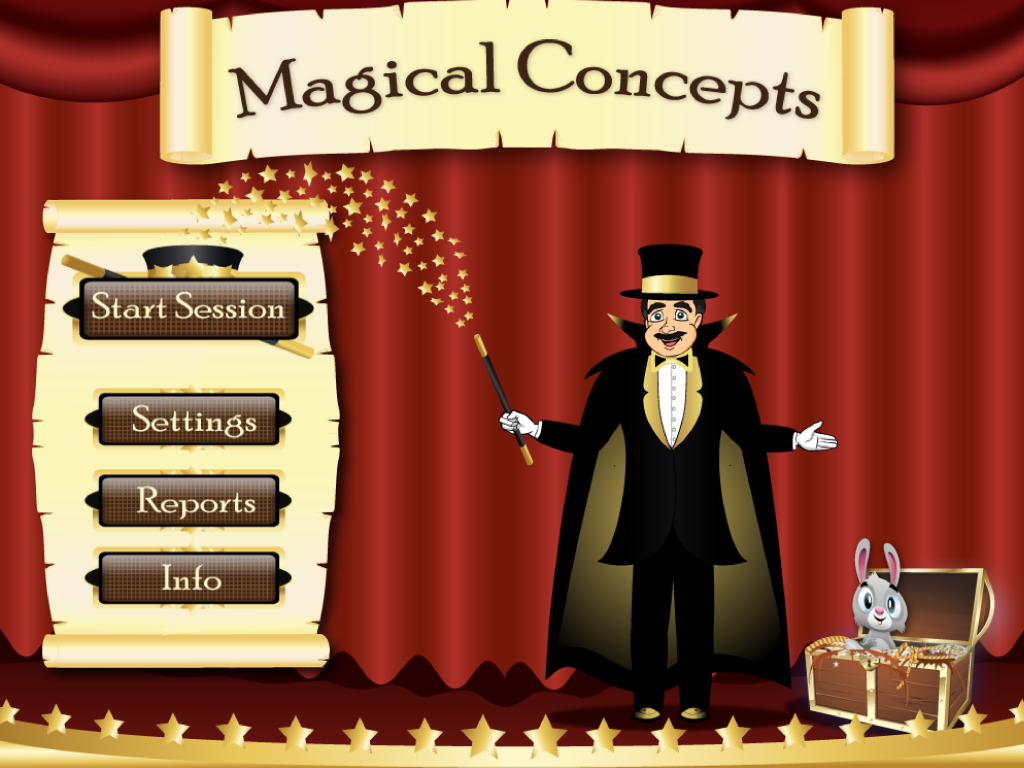
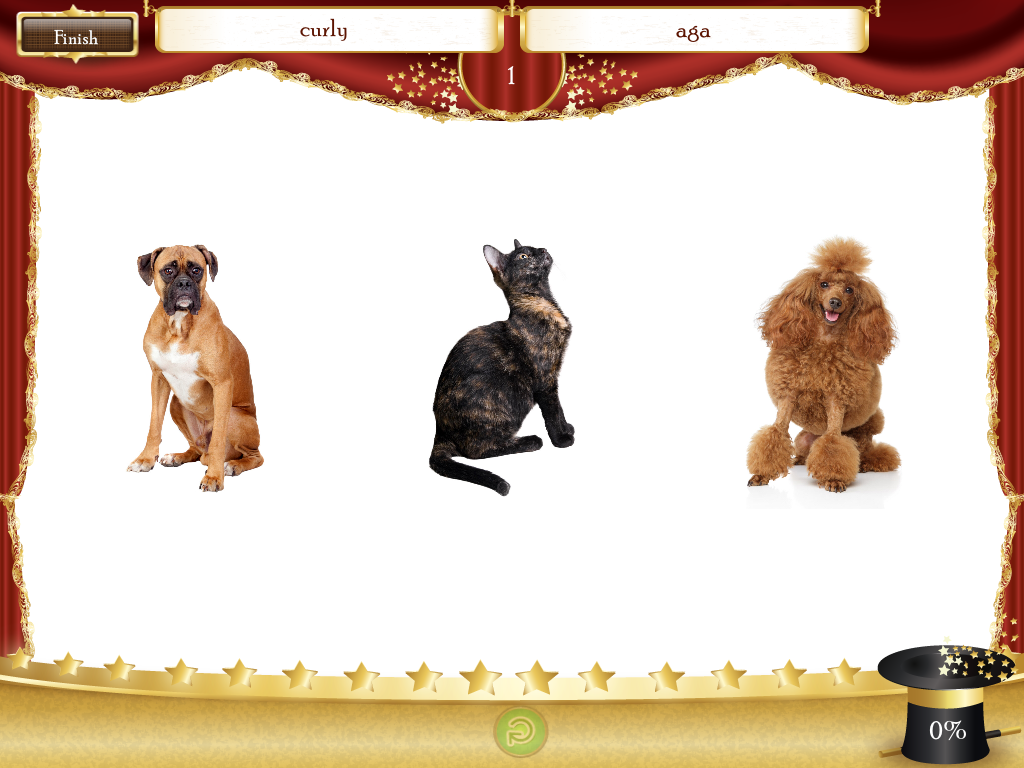

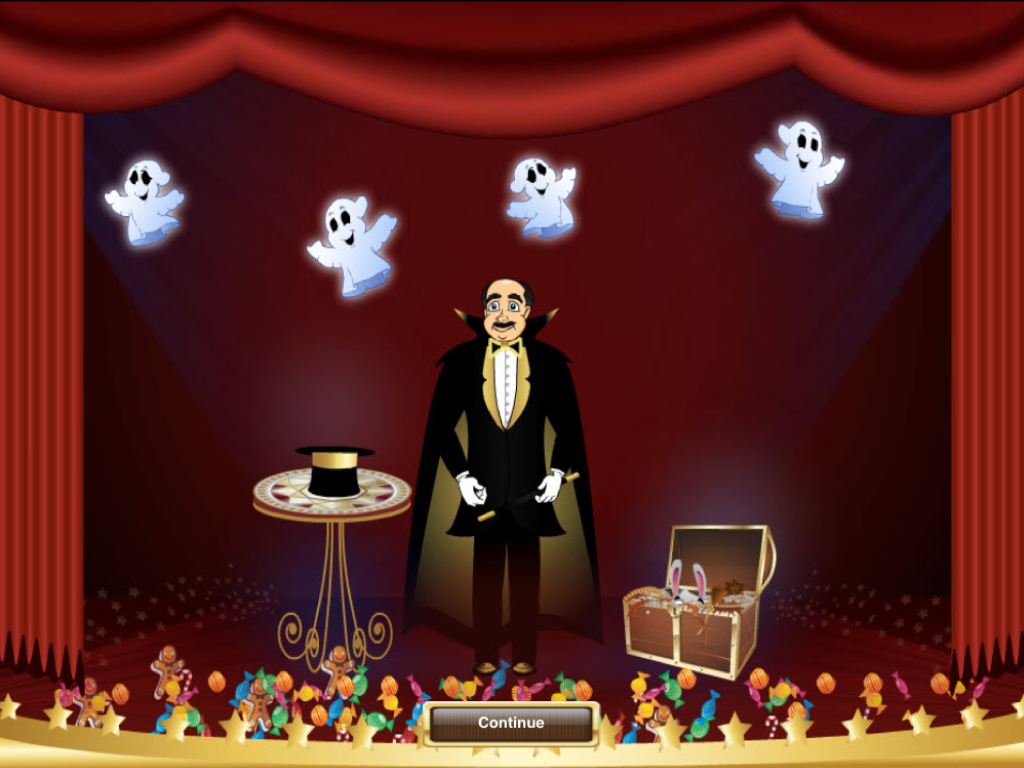
Children are welcomed by Mago the Magician, who encourages them to work hard. Children earn stars for each correct response, and when they accumulate enough stars, they are rewarded with a magic show.
Concepts are important building blocks for early academics, and research shows that understanding of basic concepts is critical for school success and high-level thinking (Klix, 1983).
Children are required to master the foundations of basic concepts to learn the fundamentals of academic subject areas. For example, the child must understand the concept of quantity (e.g., more, less, equal, all) to do mathematical computations and must know basic reading concepts (e.g., reading left to right, top to bottom, beginning, end) to learn how to read and write (Busch, 1980).
Many concepts are used in daily classroom instructions by teachers—e.g., temporal direction: “Before you start writing, read the first paragraph on page 13.” Children who do not master these basic concepts will have difficulty following classroom instructions (Vernon, 1962).
There are five major types of concepts. These are spatial (location), temporal (time), quantity (number), quality (description), and social-emotional (feelings).
Magical Concepts includes over 60 concepts that are alphabetically organized. Examples of the concepts include: Above/Below Angry/Sad/Happy/Surprised Around Apart/Together Behind/In front Big/Small Bottom/Top Clean/Dirty Closed/Open Cold/Hot Crooked/Straight Curly/Straight Day/Night Deep/Shallow Different/Same Down/Up Dry/Wet Empty/Full Far/Near Half/Whole In/Out Inside/Outside Light/Heavy Long/Short Loud/Quiet Missing Narrow/Wide Next to Old/New On/Under Over Pair Short/Tall Thick/Thin Upside down
Magical Concepts is easy to use and allows you to:
- Enter multiple students
- Select multiple concepts
- Present cards in order or randomly
- Change settings Select auto-scoring
- Select alternate counts for multiple students
- Enable or disable rewards: the stars and the magic show
- Track correct and incorrect responses
- Email results at the end of the game.
References
Busch, R. A. (1980). Predicting first-grade reading achievement. Council for Learning Disabilities, 3, 33–48. Klix, F. (1983). An evolutionary approach to cognitive processes and creativity in human being. Methods of Heuristic, 9, 19–36. Vernon, P. E. (1962). The determinants of reading comprehension. Educational and Psychological Measurement, 22, 269–278.
WHAT PEOPLE SAY
This app I think will quickly become my favorite app for concepts-there are quite a few attributes of Magical Concepts that make this app stand out. A. Taylor, SLPA
Similar Apps

TheraPlatform - Speech Therapy Software
TheraPlatform is the best in class HIPAA-compliant practice management and teletherapy software designed for speech and language therapists. Our software includes therapy notes, billing, client portal, e-claim submission and telepractice.
Virtual Speech Center offers innovative speech therapy apps for schools, private practices, independent speech pathologists and parents. We offer a wide range of mobile applications for speech therapy developed for IPad and IPhone devices.
Latest Apps
- All critical thinking 09/05/2016
- Functional Listening 04/19/2016
- Social Skills with Billy 01/17/2016
Contact Us
CopyRight© 2024 Virtual Speech Center, Inc. Privacy Policy